Homelessness in Los Angeles has a long, complex history. Yet, there are signs of meaningful progress bringing the numbers down.
Beginning in 2021, RAND researchers conduct an annual survey that includes on-the-street interviews with homeless individuals in Hollywood, Skid Row and Venice. On July 30, 2025, Building a Better Westchester attended a webinar where survey lead researchers presented key findings from their 2024 report. (A copy of the full report PDF is available here.)
To support all of us staying current on homelessness needs and trends, here are highlights from that presentation.
Top-Line Findings…
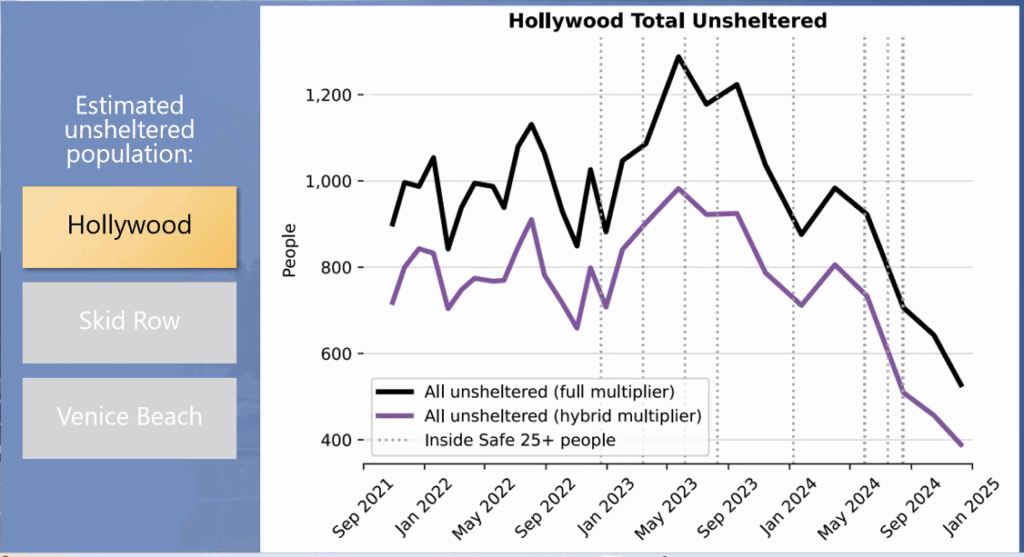
- Hollywood homelessness? Down 50% (biggest improvement area) thanks to Mayor Bass’s InsideSafe program efforts.
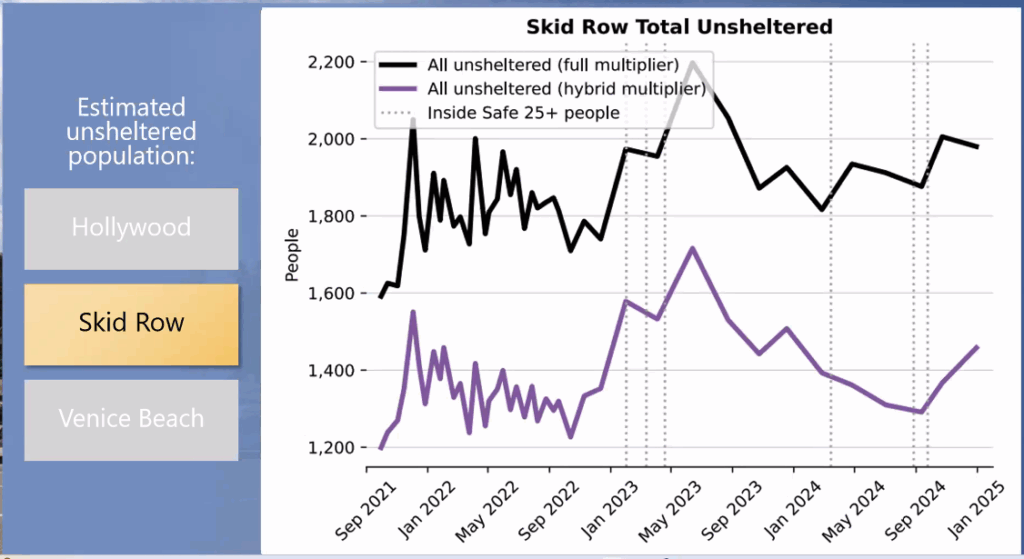
- Skid Row? About the same as last year (fewer Blacks, more Hispanics).
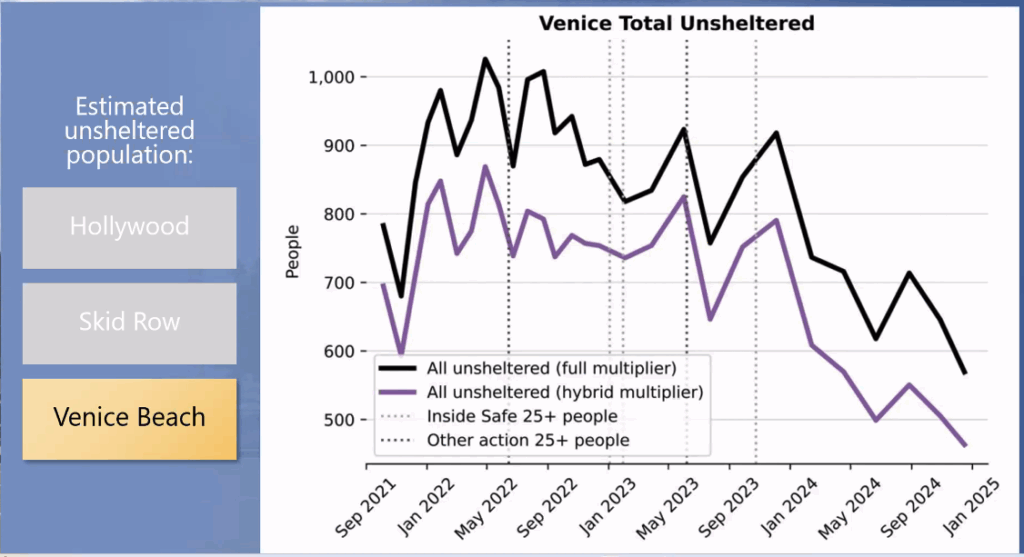
- Venice? Down 25% but that’s due to RV move-out, not permanent housing placements.
- Policy change is making a big difference. LA is just starting to harvest the results from Measure H, Prop HHH and the like. Therefore, must keep commitment to policy innovation and evolution to keep improvement placement.
- While Federal funding is in flux, there’s good news. Los Angeles relies primarily on State, County and Local funding. Therefore, LA is less vulnerable to state of Federal funding.
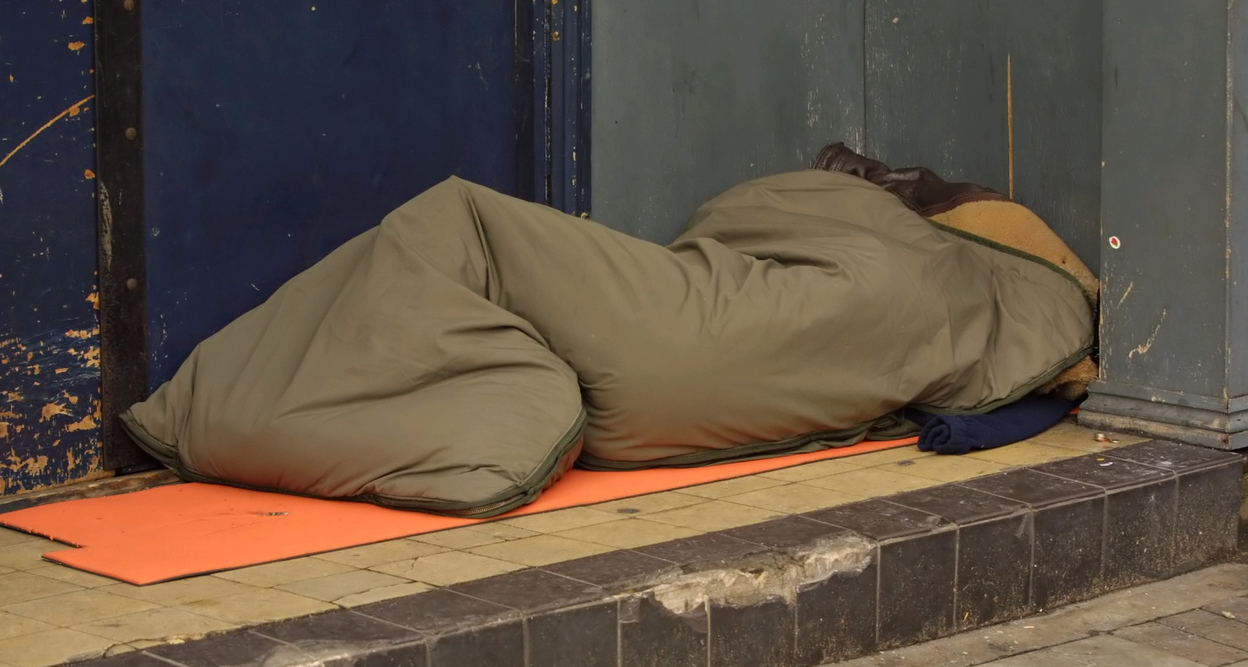
- Tent campers are easier to place due to their pre-existing sense of social connection with their tent group. Therefore, the next big service challenge: addressing the needs of “rough sleeper” individuals. (Rough sleeper: someone living on the streets without any shelter, including a tent.)
… and Stats
- 50% of those interviewed had been on the streets 3 years or longer.
- 70-80% have been force to move location.
- 35% report they have never been offered housing.
- Large decline in Black respondents in Hollywood and Skid Row as a % of the total local homeless population. On Skid Row, drop in Black population counter-balanced by large increase in Hispanics.
- Those interviewed are less well and more likely to have spent at least 1 night in jail.
- 6-7 people living on the streets pass away daily.
Top-Line Recommendations
- Increased housing placements in the 2024 study a direct result of Proposition HHH, resulting in new housing options and an increase in number of shelter beds.
- For gains to continue in the future, need to see rapid building of permanent supportive housing.
- As the “rough sleeper” population persists, social services strategies need to evolve to become effective with this harder-to-serve demographic, possibly stretching (and further straining) the existing system.
Exploring the Rough Sleeper Challenge
Homeless individuals living in community (tent groups) are easier to “bring inside,” especially if the whole group goes together into housing, maintaining their sense of connection and support.
With more tent-dwellers moving inside, this means a higher % of the homeless are “rough sleepers”—single individuals that are more
- Socially isolated;
- Exposed to the elements;
- Mobile & dynamic.
As a result:
- Service areas and inter-area coordination needs to be addressed.
- The social bonding with case workers is the primary connection.
Area-Specific Findings, If You’d Like to Know More
Hollywood: overall homelessness is down about 50%.
RAND attributed this success to Mayor Bass’s Inside Safe program which has been effective moving individuals into supportive housing.
Skid Row: No net change in homeless population. Fewer coming in, but fewer are leaving.
Depending on how one does the math, you might report that there’s been a 9% decline on Skid Row’s population. But that stat masks a different issue: people are staying longer when they do arrive. Survey staff noted that Skid Row’s population is older, there’s a higher # of women, the Black population is currently >50% of total, and those who remain on Skid Row are sicker this year than during the last survey (2023).
RAND researchers also noted that Skid Row is seeing an increase in one homeless demographic: Hispanic families, possibly the result of adults being deported. Therefore, more children living on Skid Row. Many were observed attempting to live a “normal” life by attending school and the like.
Venice: Total decline of 25%, primarily from moving RVs out of area, not transitions to being housed (in the traditional sense).
RAND researchers reported that Venice’s decline in their last study (2023) is attributed to successful Inside Safe supportive housing placements. In this latest report, the 25% decline is directly related pushing RV dwellers out of this community, not housing placements.
Interestingly, the Venice homeless population is the highest functioning, with more education than those surveyed in Hollywood and Skid Row. They confirm more financial resources and 1-in-5 say they’re employed. This population is also more likely to have a cell phone.