WHAT’S UP?
Planning’s new Landscape Design Ordinance will require developers submitting project applications to hit a minimum standard for landscaping elements. Ordinance details include items such as new tree planting minimums, tree preservation, pedestrian and biking safety measures, better screening of parking areas and industrial outdoor storage, solar shading on buildings and operable windows for natural ventilation.
IS IT IMPORTANT? YES, THANKS TO LA’S REPUTATION AS AN UGLY CITY.
LA’s architecture historian and critic Greg Goldin once said,
“…with no central force driving the city’s design—no Daniel Burnham, no Robert Moses—with an official sanction and scepter to wield, every effort to adopt a citywide plan floundered, leaving Los Angeles to the whims, and tightwad budgets, of developers.” — Zocalo Public Square.
It may have taken 100 years (LA’s first zoning ordinace was adopted in 1921), but LA is finally implementing serious landscaping design code that requires a higher-quality minimums, plus incentives for developers who prize delivering better buildings. Issues addressed include specs for pedestrian and bike rider safety, new tree planting, natural and passive cooling ventilation, shade control, and air quality monitoring.
HOW DOES IT WORK?
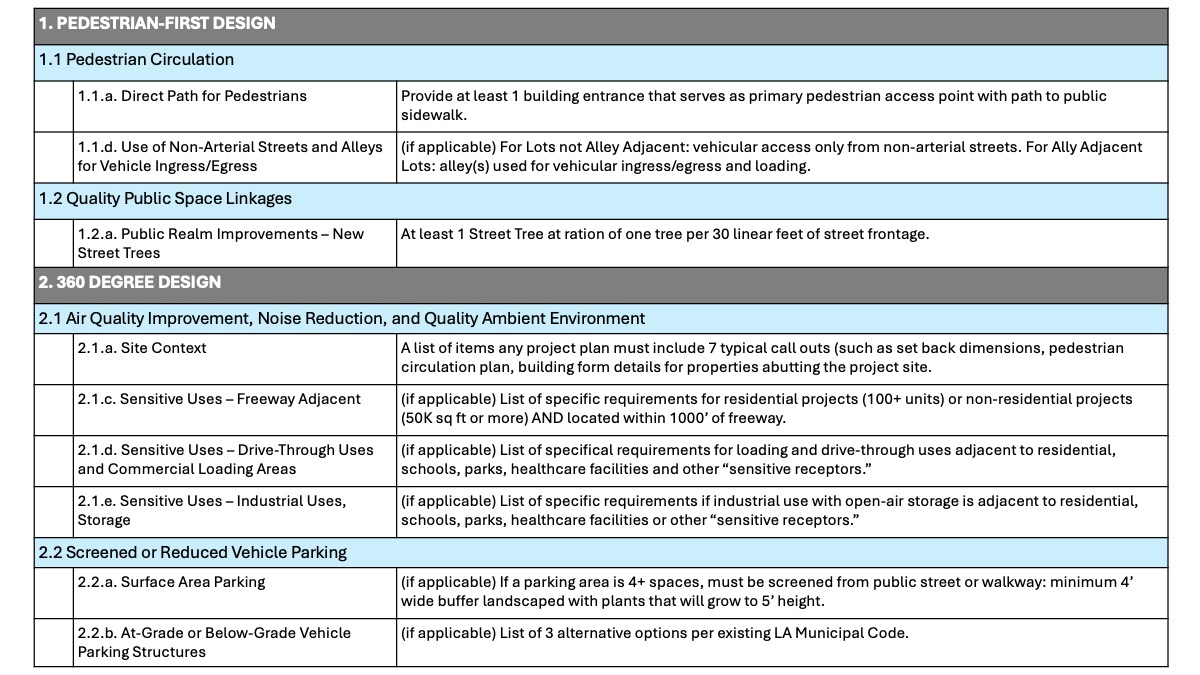
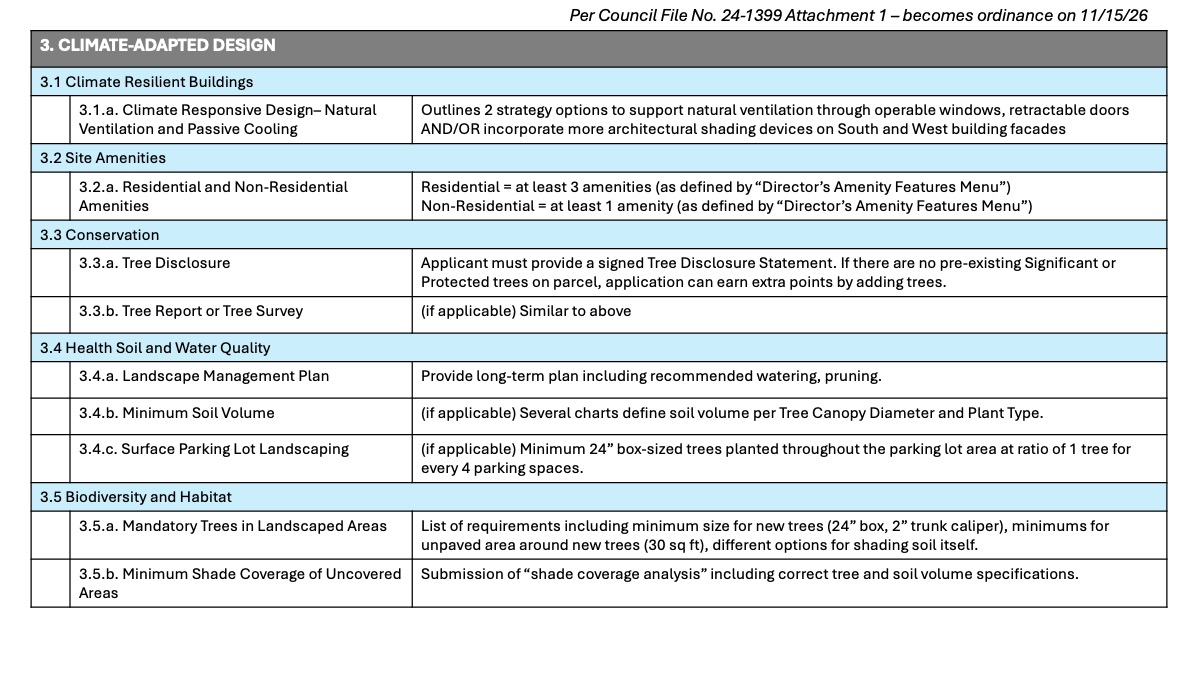
The new Landscape Design Ordinance delivers a points scoring system addressing design elements under 3 big categories:
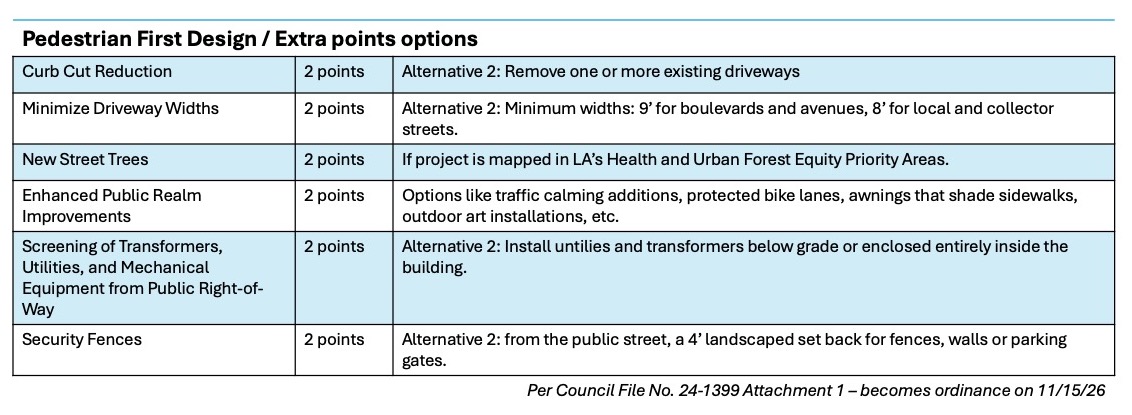
- Pedestrian First Design
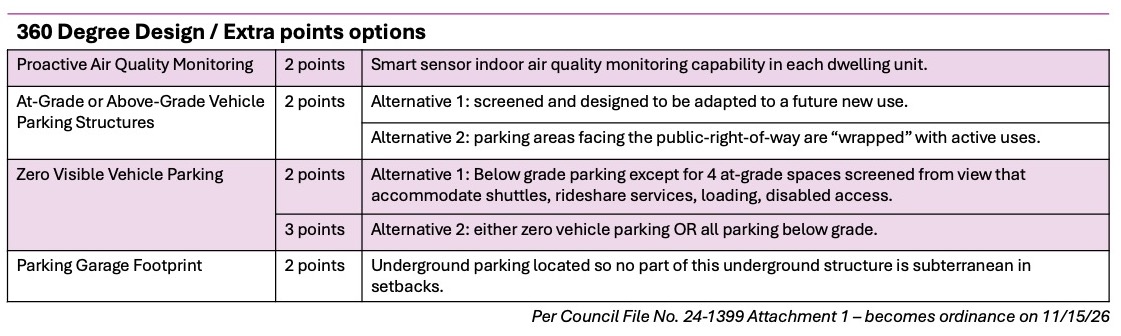
- 360 Degree Design
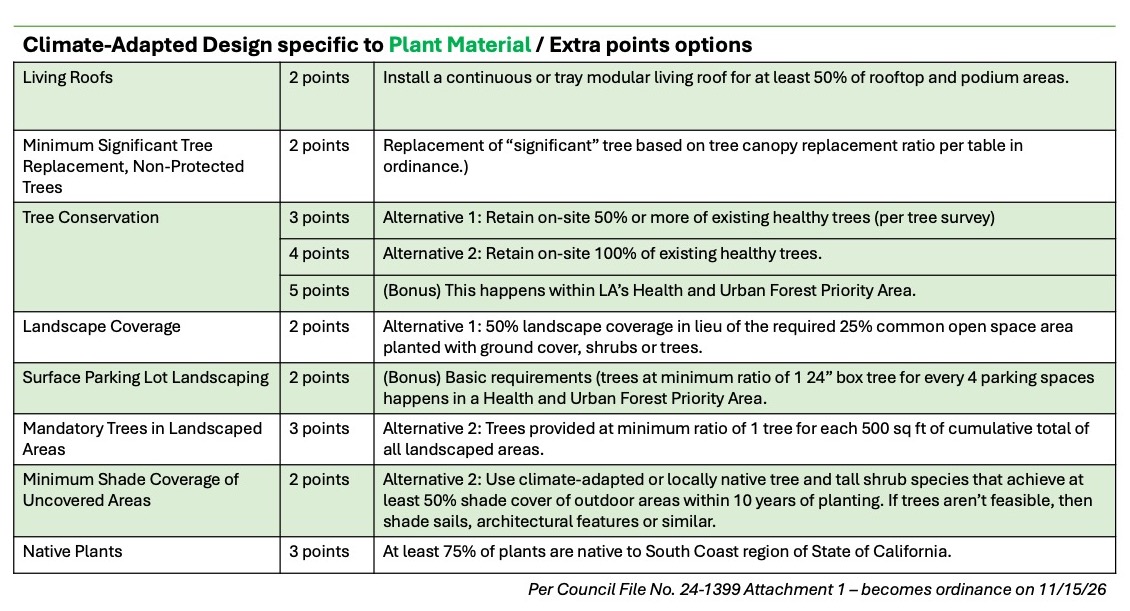
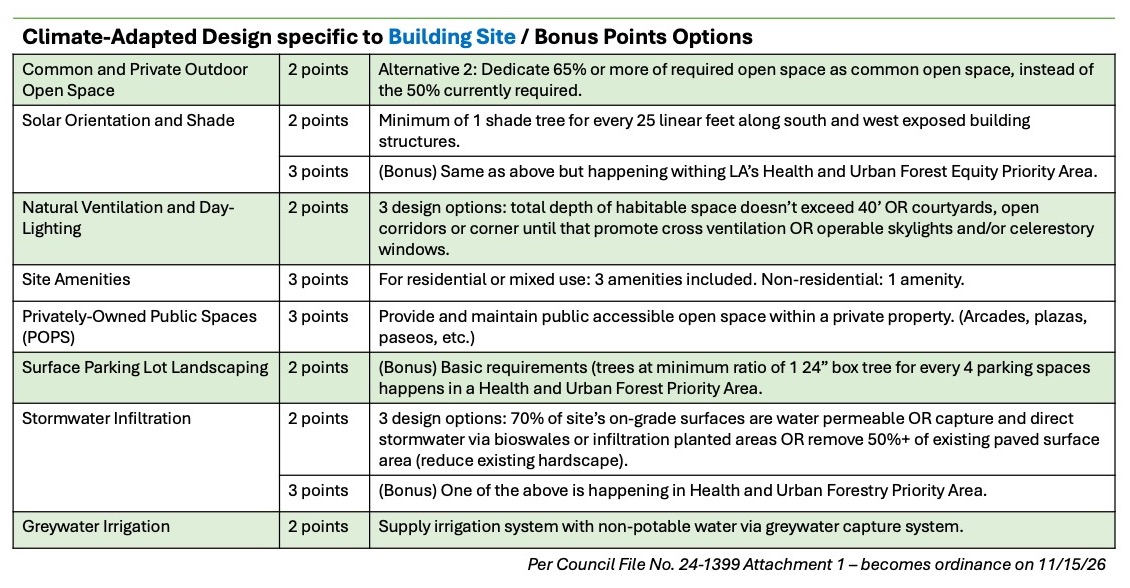
- Climate-Adapted Design
Each application must deliver elements that total to a minimum # of points:
- Residential or mixed-use (residential + commercial) project? Must score a total of 27 points, with 9 of those points being new mandatory minimums.
- Industrial use projects must score a minimum of 15 points.
WHAT’S MANDATORY IN THIS NEW LANDSCAPE DESIGN ORDINANCE?
WHAT’S INCENTIVIZED IN THIS NEW LANDSCAPE DESIGN ORDINANCE?
These are the landscape and environmental design elements developers can include in their Planning applications to get extra points (from 2 to 4 per item). This methodology clearly illustrates Planning’s priorities for future building projects.